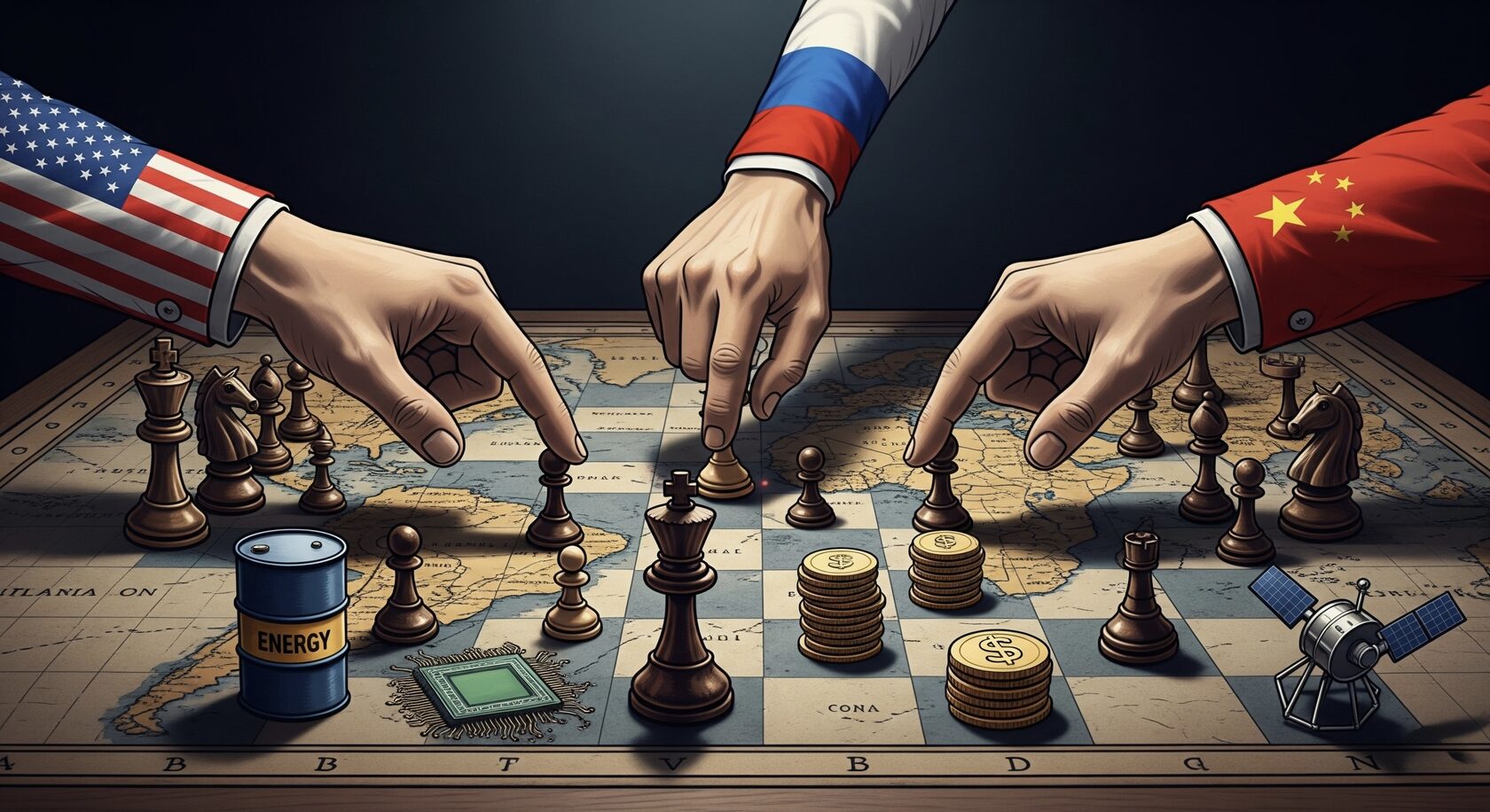
The handshakes in Alaska and the displays of unity in Washington have sent a wave of cautious optimism through global markets. After years of escalating tension, the recent summits between Presidents Trump, Putin, and European leaders signal a pragmatic shift from open confrontation to managed dialogue. Many see this as a return to stability, a sign that the era of unpredictable economic warfare is ending.
At AMTORG, we see something different. Based on our analysis over the last five years, this outcome was not only predictable but is also being dangerously misinterpreted. This isn't a return to the old normal; it is the beginning of a new, far more complex economic battlefield. For businesses, especially those with ties to Russia and the post-Soviet space, believing that the storm is over is the single most critical mistake you can make right now.
The Real U.S. Endgame: Economics, Not Geopolitics
To understand the current landscape, one must discard the outdated notion that the U.S.-Russia relationship exists in a vacuum. For the current White House administration, Russia is not the primary adversary. The true contest, the one that will define the 21st century, is the economic war with China. Every major geopolitical decision, including the dialogue with Moscow, is a calculated move in this grander economic chess game.
The strategic goal is clear: to methodically decouple Russia from its "no-limits" partnership with Beijing. A Russia that is economically entangled with, or at least neutral towards, the West is a far less potent ally for China. This strategy will not be executed through treaties and alliances, but through a sophisticated and often opaque application of economic pressure and incentives. The recent summits were not about resolving the conflict in Ukraine; they were about setting the terms of Russia’s potential role in a U.S.-centric economic order. Washington is signaling that a path away from total isolation exists, but it will be transactional, conditional, and entirely on its terms.
The Looming Crisis for Russian Business: Three Illusions to Shatter
While the Kremlin may project the Alaska summit as a diplomatic victory, the underlying reality for Russian businesses is perilous. The new U.S. approach creates a minefield of risks that expert navigation can only mitigate.
The AMTORG Advantage: Five Years of Navigating the Unseen Battlefield
Long before these dynamics became headlines, AMTORG was operating at their epicenter. For the past five years, we have been engaged in a quiet, intensive effort at the intersection of business and policy. We understood that the future of international trade would be dictated less by market forces and more by Government Relations (GR) and strategic geopolitical maneuvering.
Our work is built on three pillars:
Conclusion: Your Next Move is Critical
The recent summits did not change the game; they simply revealed the rules of the new one. For Russian businesses and their international partners, the path forward is narrower and more treacherous than ever. Waiting for clarity is a losing strategy. Proactive, expert-guided action is the only way to secure your position.
If your business is facing the challenges of this new era, from navigating the remnants of sanctions to seeking new growth in a polarized world, the time to act is now. Contact AMTORG for a confidential consultation. We approach every case with meticulous care, crafting the bespoke strategies required to turn systemic risk into a unique advantage.
At AMTORG, we see something different. Based on our analysis over the last five years, this outcome was not only predictable but is also being dangerously misinterpreted. This isn't a return to the old normal; it is the beginning of a new, far more complex economic battlefield. For businesses, especially those with ties to Russia and the post-Soviet space, believing that the storm is over is the single most critical mistake you can make right now.
The Real U.S. Endgame: Economics, Not Geopolitics
To understand the current landscape, one must discard the outdated notion that the U.S.-Russia relationship exists in a vacuum. For the current White House administration, Russia is not the primary adversary. The true contest, the one that will define the 21st century, is the economic war with China. Every major geopolitical decision, including the dialogue with Moscow, is a calculated move in this grander economic chess game.
The strategic goal is clear: to methodically decouple Russia from its "no-limits" partnership with Beijing. A Russia that is economically entangled with, or at least neutral towards, the West is a far less potent ally for China. This strategy will not be executed through treaties and alliances, but through a sophisticated and often opaque application of economic pressure and incentives. The recent summits were not about resolving the conflict in Ukraine; they were about setting the terms of Russia’s potential role in a U.S.-centric economic order. Washington is signaling that a path away from total isolation exists, but it will be transactional, conditional, and entirely on its terms.
The Looming Crisis for Russian Business: Three Illusions to Shatter
While the Kremlin may project the Alaska summit as a diplomatic victory, the underlying reality for Russian businesses is perilous. The new U.S. approach creates a minefield of risks that expert navigation can only mitigate.
- The Illusion of Sanctions Relief: Do not expect a swift or broad removal of sanctions. Any relief will be slow, surgical, and tactical, used as leverage in the broader negotiation. Sectors critical to the U.S. economic strategy against China (e.g., tech, finance) will remain under intense pressure. Furthermore, years of sanctions have fundamentally altered risk perceptions. Even if primary sanctions are eased on a specific entity, the stain of reputational risk will make Western banks, insurers, and partners hesitant to re-engage for years to come. The financial and compliance infrastructure to isolate Russia is built, and it won't be dismantled overnight.
- The Illusion of a "Return to Normal": The global economic system has been rewired. Supply chains have been rerouted, new payment systems have emerged, and a deep-seated mistrust now governs international commerce. Russian companies that have spent years pivoting towards Asia will find that this path is also fraught with peril, as the U.S. aggressively deploys secondary sanctions against any entity deemed to be aiding its primary economic competitor, China. You are caught between a wary West and a demanding East that is itself under U.S. economic scrutiny.
- The Illusion of Stability: The new U.S. policy is one of managed volatility. Washington will use the threat of new sanctions and the promise of exemptions as a constant tool of statecraft. This creates a business environment of radical uncertainty where your company's fate could be decided by a policy shift in Washington or a development in the South China Sea. Long-term planning becomes nearly impossible without elite-level insight into the political drivers behind these economic decisions.
The AMTORG Advantage: Five Years of Navigating the Unseen Battlefield
Long before these dynamics became headlines, AMTORG was operating at their epicenter. For the past five years, we have been engaged in a quiet, intensive effort at the intersection of business and policy. We understood that the future of international trade would be dictated less by market forces and more by Government Relations (GR) and strategic geopolitical maneuvering.
Our work is built on three pillars:
- Expertise and Access: We don't just analyze policy; we understand the people and motivations behind it. Our presence in key global centers allows us to provide clients with insights that are simply not available through public channels.
- Proactive Engagement: We have worked tirelessly to ensure our clients' projects are not derailed by external forces. We build bridges of understanding and operate within the legal framework to protect our clients' interests above all else.
- Absolute Confidentiality: The sensitivity of our work demands the highest level of discretion. We are the trusted partner for businesses navigating their most critical challenges, ensuring their strategic moves remain confidential and effective.
Conclusion: Your Next Move is Critical
The recent summits did not change the game; they simply revealed the rules of the new one. For Russian businesses and their international partners, the path forward is narrower and more treacherous than ever. Waiting for clarity is a losing strategy. Proactive, expert-guided action is the only way to secure your position.
If your business is facing the challenges of this new era, from navigating the remnants of sanctions to seeking new growth in a polarized world, the time to act is now. Contact AMTORG for a confidential consultation. We approach every case with meticulous care, crafting the bespoke strategies required to turn systemic risk into a unique advantage.